
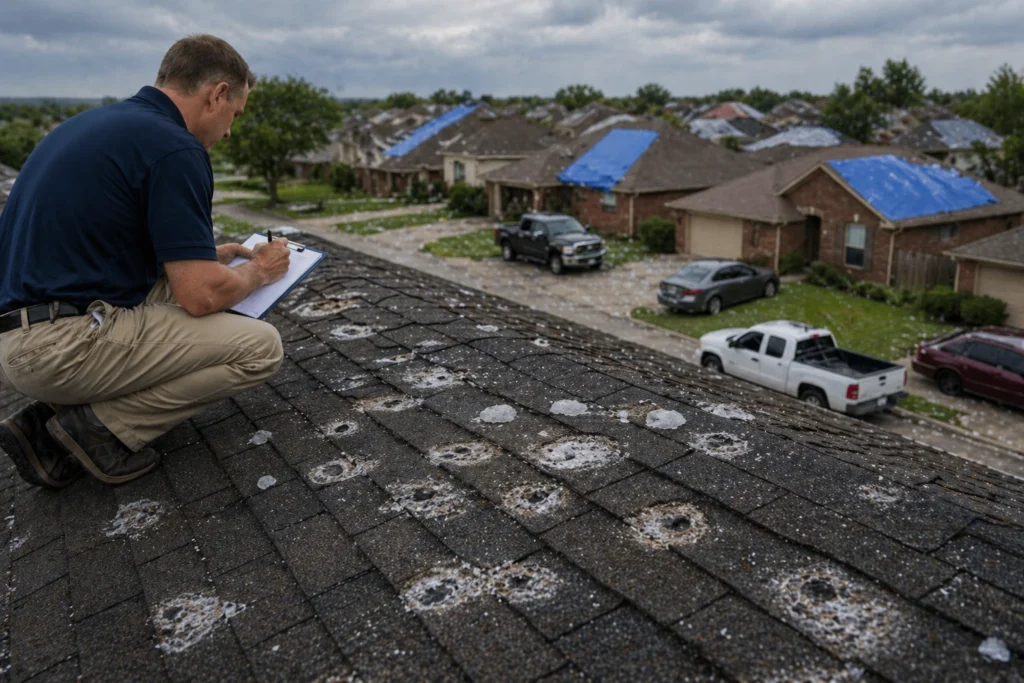
A hailstorm rolls through. Loud. Fast. Destructive. You step outside the next morning and see dents in your gutters, bruised shingles, maybe even pieces of your roof scattered across the yard. That’s when the real challenge begins not the storm, but the claim. And right at the center of it is one critical decision: Public Adjuster vs. Insurance Adjuster for Hail Claims in Texas. Choose wrong, and you could leave thousands on the table. Choose right, and you protect your property, your finances, and your peace of mind.
If you’re dealing with storm damage in Mckinney, this isn’t theoretical. It’s real. Hail claims here are frequent, competitive, and often underpaid when not handled correctly. Many homeowners assume the insurance process will naturally lead to a fair outcome. Sometimes it does. Often, it doesn’t. The difference usually comes down to who is guiding the claim and how thoroughly the damage is evaluated. Let’s break this down in a way that actually helps you make a confident, informed decision.
What Is a Public Adjuster?
A public adjuster is your advocate. Plain and simple. They are licensed professionals in Texas who work exclusively for policyholders not insurance companies. Their job is to manage your claim from start to finish while pushing for the maximum settlement allowed under your policy. They don’t just “assist.” They take ownership of the process.
Here’s what that looks like in practice:
- Full Property Inspection
A public adjuster doesn’t stop at what’s visible from the ground. They examine the entire roofing system, including shingles, underlayment, flashing, vents, and soft metals. They look for patterns of damage, not just isolated issues. - Detailed Documentation
Every piece of evidence is captured with purpose. High-resolution photos, measurements, notes, and diagrams are organized into a claim file that supports negotiation. - Accurate Estimating
Using industry-standard software like Xactimate, they create a detailed estimate that reflects real-world pricing and scope. This isn’t a rough guess. It’s a structured, line-by-line breakdown. - Claim Management
Filing paperwork, tracking deadlines, coordinating inspections, and communicating with the insurance company all handled on your behalf. - Negotiation & Supplements
They don’t accept the first number. They challenge it. If additional damage is discovered, they prepare supplements and push for revised payouts.
How They Get Paid
Public adjusters typically work on a contingency fee, usually between 5% and 15% of the final settlement. That means they only get paid when you do. Their success is directly tied to your outcome, which aligns incentives in a powerful way.
What Is an Insurance Adjuster?
An insurance adjuster works for the insurance company. That’s the defining difference. Their role is to evaluate your claim and determine how much the insurer should pay based on the terms of your policy. They are trained professionals, and many are experienced. But their responsibility is to the carrier not to you.
There are two main types:
- Staff Adjusters – Full-time employees of the insurance company
- Independent Adjusters – Contractors hired during high-volume periods, especially after major storms
Their responsibilities include:
- Inspecting the property
- Identifying visible damage
- Preparing the initial estimate
- Determining coverage eligibility
They are part of the process. But they are not your representative. Their goal is to ensure claims are paid correctly while also managing the company’s financial exposure.
Key Differences at a Glance
| Factor | Public Adjuster | Insurance Adjuster |
| Who they represent | Policyholder | Insurance company |
| Primary goal | Maximize claim payout | Control claim costs |
| Payment structure | % of settlement | Salary or contract |
| Scope of work | Full claim management | Initial evaluation |
| Negotiation | Active and ongoing | Limited |
This comparison highlights the fundamental difference in perspective. One works for you. The other works for the company paying the claim.
How Hail Damage Claims Work in Texas
Understanding the process is essential if you want to avoid costly mistakes.
Typical Claim Flow
- A hailstorm causes damage
- The property owner files a claim
- An insurance adjuster inspects the property
- An initial estimate is issued
- Repairs begin or are delayed
- Supplements are submitted if needed
- Final payment is released
On the surface, it seems straightforward. But each step has variables that can affect your final payout.
Why Hail Claims Are Complex
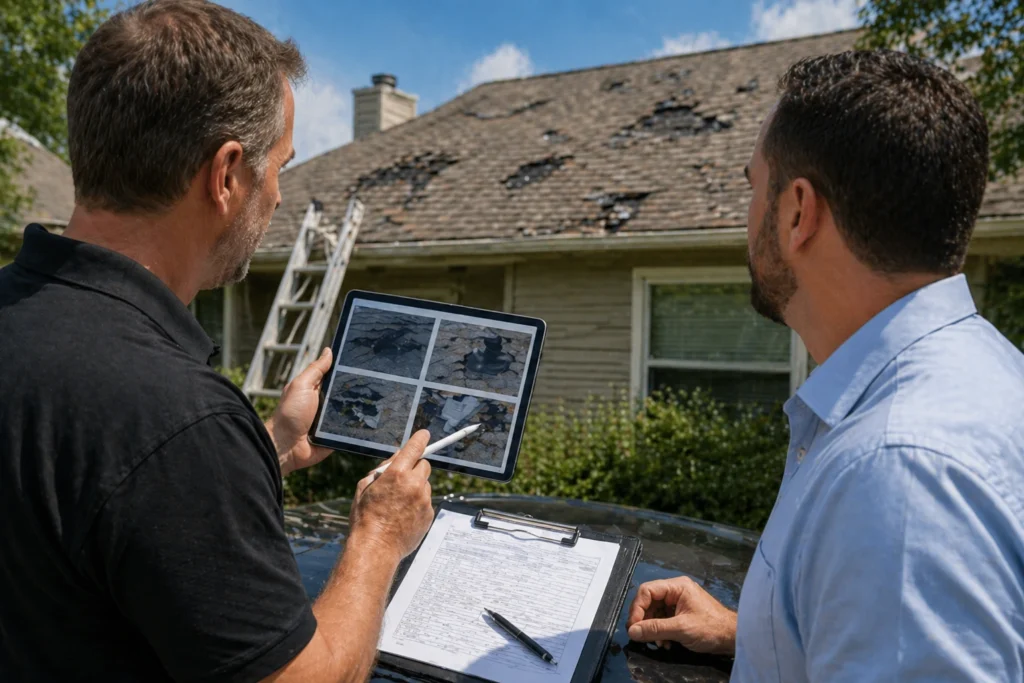
Hail damage is rarely uniform. Some areas of the roof may be heavily impacted, while others appear intact. Damage can be subtle, especially on certain materials. More importantly, roofing systems are layered. What’s visible on the surface is only part of the story.
Common complexities include:
- Hidden underlayment damage
- Compromised flashing and seals
- Ventilation system issues
- Local building code requirements
- Material matching challenges
If these elements aren’t identified and included in the claim, they don’t get paid. Homeowners in Mckinney often face this exact issue. The initial estimate may cover basic repairs, but it frequently misses system-wide damage that becomes evident during construction.
Where Insurance Adjusters Fall Short
This isn’t about blaming individuals. It’s about understanding constraints. After a major hail event, insurance adjusters handle a high volume of claims. Time becomes limited. Inspections are shorter. Decisions are faster. That environment leads to gaps.
Common Limitations
- Limited time per inspection
- Focus on visible damage
- Standardized estimating approaches
- Minimal follow-up unless challenged
Frequently Missed Items
- Soft metal impacts on vents and gutters
- Ridge caps and starter shingles
- Ice and water shield requirements
- Drip edge and flashing issues
- Underlayment damage beneath shingles
Each of these items carries cost. When they’re missed, the claim value drops. Without someone advocating for a more detailed scope, those items may never be revisited.
How Public Adjusters Add Real Value
Public adjusters change the dynamic of the claim. Instead of reacting to the insurance company’s estimate, they build a comprehensive case from the beginning.
1. Comprehensive Inspections
They evaluate the entire roofing system, not just isolated areas. This leads to a more accurate understanding of the damage.
2. Structured Estimating
Every component is priced using standardized tools. Labor, materials, and regional pricing are all factored in.
3. Documentation Strategy
Photos and reports are organized to support negotiation. Every detail has a purpose.
4. Active Negotiation
They communicate directly with the insurance company, challenge discrepancies, and push for adjustments.
5. Supplement Execution
They identify additional damage during the repair process and submit detailed supplements to increase the claim value. In the discussion of Public Adjuster vs. Insurance Adjuster for Hail Claims in Texas, this is where outcomes often diverge. One approach accepts the initial scope. The other builds and expands it.
The Supplement Process: Where Claims Are Won or Lost
The supplement phase is where many claims either improve or stall.
A supplement is a request to increase the claim amount based on new findings or additional costs. It’s a normal part of the process, especially for hail damage.
Why Supplements Are Necessary
- Hidden damage becomes visible during repairs
- Code requirements require upgrades
- Material costs change
- Initial estimates miss key components
Hail Damage Claim Supplements: What Carriers Miss in Their Scope
This is where the gap becomes obvious. Carriers often focus on surface-level damage, but deeper issues frequently go unaccounted for. These omissions can significantly affect the total claim value.
High-Impact Supplement Items
| Category | Item | Impact |
| Roofing | Decking replacement | High |
| Roofing | Steep charges | Medium |
| Waterproofing | Ice & water shield | High |
| Ventilation | Ridge vents | Medium |
Without proper documentation and justification, these requests are often denied or reduced. Public adjusters understand how to present supplements in a way that aligns with policy coverage and industry standards. Insurance adjusters evaluate what’s submitted but they don’t typically drive the process. That distinction matters.
Cost vs Value: Is Hiring a Public Adjuster Worth It?
At first glance, paying a percentage of your claim might feel like a drawback. But the real question isn’t cost—it’s outcome.
Example Scenario
- Initial insurance estimate: $18,000
- Adjusted claim with representation: $32,000
- Public adjuster fee (10%): $3,200
- Net gain: $10,800
The numbers speak for themselves.
When It Makes Sense
- Large or complex damage
- Claims with multiple components
- Situations where time is limited
- Cases involving disputes or denials
When It May Not
- Minor repairs with clear scope
- Claims that are quickly and fairly resolved
Still, most hail claims involve enough complexity to justify professional involvement.
Case Scenarios: Real-World Comparisons
Scenario 1: Insurance Adjuster Only
A homeowner files a claim after a hailstorm. The adjuster inspects the roof and issues an estimate covering basic shingle replacement. A contractor later identifies additional damage, but the documentation is incomplete. Supplements are submitted but only partially approved. The final payout increases slightly but remains below the true repair cost.
Scenario 2: With Public Adjuster
Another homeowner experiences a similar storm. A public adjuster conducts a detailed inspection and prepares a comprehensive estimate upfront. Additional damage is anticipated and documented early. Supplements are submitted with strong evidence and justification. The final payout reflects the full scope of repairs.
The difference isn’t luck. It’s preparation and execution.
Public Adjuster vs. Insurance Adjuster for Hail Claims in Texas
This comparison ultimately comes down to representation. When evaluating Public Adjuster vs. Insurance Adjuster for Hail Claims in Texas, the key question is simple: who is advocating for your best outcome?
Insurance Adjuster Approach
- Evaluates the claim
- Issues an estimate
- Responds to additional requests
Public Adjuster Approach
- Builds the claim
- Expands the scope
- Negotiates continuously
Decision Factors
- Size of the claim
- Complexity of the damage
- Your availability to manage the process
- Your comfort with negotiation
In storm-prone areas like Mckinney, more homeowners are choosing to have representation. Not because they distrust the system but because they understand how it works.
Common Mistakes Property Owners Make
Even experienced property owners can misstep during a claim.
Mistakes to Avoid
- Accepting the first estimate without review
- Failing to document damage immediately
- Delaying the claim process
- Misinterpreting policy coverage
- Attempting to negotiate without expertise
Each of these mistakes can reduce your claim value or delay your recovery.
When to Hire a Public Adjuster
Timing plays a significant role in claim outcomes.
Ideal Timing
- Immediately after the storm
- After receiving the initial estimate
- Following a denial or underpayment
Signs You Need Help
- The estimate feels incomplete
- The claim process is slow or inconsistent
- Communication with the insurer is unclear
- You feel overwhelmed managing the details
The earlier a public adjuster is involved, the more influence they have over the claim structure and outcome.
How to Choose the Right Public Adjuster
Selecting the right professional is critical.
Key Criteria
- Active Texas license
- Experience with hail damage claims
- Proficiency in Xactimate
- Strong documentation practices
- Transparent contract terms
What to Look For in Practice
- Clear communication
- Organized reporting
- Willingness to explain the process
- Proven track record of successful claims
Taking the time to choose the right adjuster can significantly impact your final result.
Final Verdict: Which One Should You Trust?
Insurance adjusters are necessary. They are part of every claim. But they are not your advocate. Public adjusters are. When comparing Public Adjuster vs. Insurance Adjuster for Hail Claims in Texas, the decision comes down to your priorities.
If you want a straightforward process and are comfortable accepting the initial outcome, working directly with the insurance adjuster may be sufficient. If you want to ensure every detail is captured, every dollar is justified, and every opportunity for improvement is pursued, a public adjuster provides that level of representation.
Conclusion
Hail damage claims are not just about repairs. They are about recovery, accuracy, and financial protection. The gap between an average payout and a fully optimized claim can be significant. In many cases, it comes down to how well the claim is documented, presented, and negotiated. Interestingly, complex evaluation processes in claims can resemble analytical frameworks like Markov decision process where each step and decision influences the final outcome. Miss one step, and the result changes.
The same applies to your claim. Understand your options. Evaluate your situation. Make a decision that aligns with your goals. Because once the claim is closed, the opportunity to improve it is gone.
FAQs
A public adjuster represents you, while an insurance adjuster represents the insurance company.
You can hire one right after the storm, after filing a claim, or even after a denial.
In many cases, yes especially when damage is complex or initially under-scoped.
They typically charge 5% to 15% of the final claim settlement.
Yes, but you may miss important damage or undervalue your claim without expert guidance.
They focus on visible damage and policy coverage, often under tight time constraints.
Supplements are additional requests for payment when hidden or missed damage is discovered.
No, it often improves efficiency by strengthening documentation and communication.
A public adjuster can help reopen and challenge the denial with better evidence.
Usually not, as their value is highest in larger or more complex claims.