

Hailstorms don’t knock. They arrive with force fast, loud, and destructive. And when the sky clears, the damage they leave behind isn’t always obvious. That’s the problem. Because what you can’t see can cost you thousands. A hail damage roof insurance claim is one of the most critical steps you can take after a storm. Yet many homeowners hesitate. They assume their roof looks fine. They wait days or weeks before taking action. That delay often leads to reduced payouts or worse, denied claims.
In Mckinney, storms can escalate quickly, and roofing systems take a beating more often than people realize. I’ve seen roofs that appeared untouched from the ground but required full replacement after a professional inspection. The difference wasn’t the damage it was awareness. This guide gives you that awareness. It walks you through exactly how to protect your roof, document damage, and maximize your insurance claim. No fluff. Just real, actionable insight.
Understanding Hail Damage on Roofs
What Happens During a Hailstorm
Hail forms when strong updrafts push moisture high into freezing zones in the atmosphere. These droplets freeze, grow, and cycle through the storm until gravity takes over. When they fall, they hit hard. A 1-inch hailstone can strike your roof at speeds exceeding 50 mph. Larger stones can exceed 70 mph. That kind of force doesn’t just bounce it breaks, dents, and weakens materials. The unpredictable motion of hailstones inside storm systems can even resemble behavior studied in Brownian motion.
Common Types of Roof Damage
Different materials react differently. But damage always leaves clues.
| Roofing Material | Typical Hail Damage |
| Asphalt Shingles | Granule loss, bruising, soft spots |
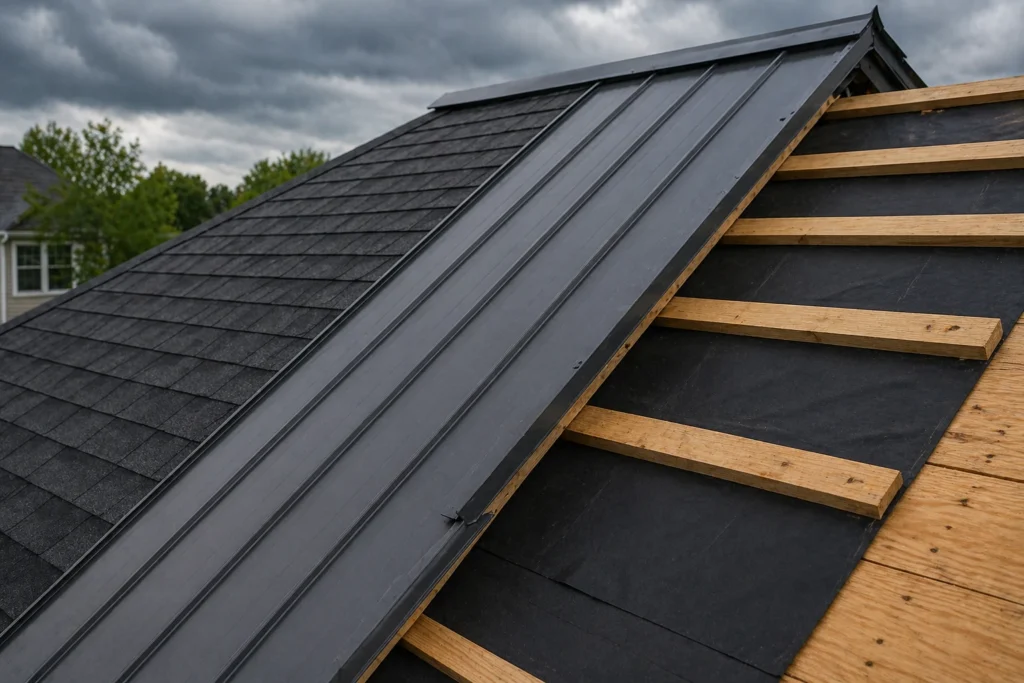
| Metal Roofing | Dents, coating damage, seam stress |
| Tile Roofing | Cracks, chips, fractures |
| Wood Shakes | Splitting, punctures, moisture intrusion |
Some damage is obvious. Some isn’t. And hidden damage is what often gets missed in claims.
Signs Your Roof Has Hail Damage
Exterior Warning Signs
Walk your property carefully and look for:
- Dented gutters and downspouts
- Impact marks on vents and flashing
- Missing or loosened shingles
- Granules collecting near drains
These are strong indicators that you may need to file a hail damage roof insurance claim.
Interior Warning Signs
Damage doesn’t stop at the roof.
Check inside for:
- Ceiling stains
- Damp attic insulation
- Musty odors
- Peeling paint
If you’re seeing these, water intrusion has already started.
Immediate Steps After a Hailstorm
Speed matters. But smart action matters more.
Safety First
Never rush onto your roof right after a storm.
Check for:
- Loose debris
- Structural instability
- Electrical hazards
Stay safe first. Always.
Initial Documentation
This is where your hail damage roof insurance claim begins. Many homeowners start searching for How to Document Hail Damage for an Insurance Claim at this stage and for good reason. Documentation is the backbone of your case.
Capture:
- Wide-angle roof photos
- Close-ups of damage
- Surrounding property impacts
Also record:
- Date and time
- Storm conditions
- Weather reports
Take more photos than you think you need. You’ll thank yourself later.
Temporary Protection Measures
Prevent further damage immediately.
- Use tarps to cover exposed areas
- Seal leaks if possible
- Move valuables away from affected zones
You’re stabilizing the situation not fixing everything yet.
Filing a Hail Damage Roof Insurance Claim
Step-by-Step Process
- Contact your insurance provider
- Open a claim immediately
- Schedule an inspection
- Submit your documentation
- Review the estimate carefully
Execution matters at every step.
Understanding Your Policy
Not all policies are the same.
- Replacement Cost Value (RCV): Covers full replacement
- Actual Cash Value (ACV): Accounts for depreciation
Also check:
- Deductibles
- Coverage limits
- Exclusions
Understanding this now prevents surprises later.
What Insurance Companies Often Miss
This is where most homeowners lose money. Many don’t realize that Hail Damage Claim Supplements: What Carriers Miss in Their Scope is a major factor in underpaid claims. Initial estimates often skip critical components.
Commonly Missed Items
- Flashing and vents
- Underlayment damage
- Code-required upgrades
- Edge materials and accessories
These omissions directly reduce your claim value.
Why Initial Estimates Fall Short
Adjusters face:
- High claim volumes
- Limited inspection time
- Standardized estimating systems
That leads to incomplete scopes. Not always intentional but consistently impactful.
The Supplement Process Explained
What Is a Supplement?
A supplement is an addition to your claim that includes missed or underestimated damage.
How Supplements Increase Claim Value
They:
- Add missing line items
- Adjust outdated pricing
- Ensure full scope coverage
This is often where claim values increase significantly.
Timing Your Supplement Submission
Timing matters.
- Too early: incomplete scope
- Too late: delays and pushback
Submit when documentation is complete.
Denied Claim? Here’s What Happens Next
Denials happen. More often than you think.
After receiving one, many homeowners begin researching What to Do If Your Hail Claim Was Denied in Texas and realize they still have options.
Common Reasons for Denial
- Insufficient documentation
- “Wear and tear” classification
- Late filing
How to Respond
- Request a reinspection
- Provide stronger evidence
- Bring in independent professionals
A denied hail damage roof insurance claim can still be overturned.
Representation Matters More Than You Think
At some point, the question becomes unavoidable should you handle this alone? Understanding Public Adjuster vs. Insurance Adjuster for Hail Claims in Texas can completely change how you approach your claim.
Key Differences
| Role | Represents |
| Insurance Adjuster | Insurance company |
| Public Adjuster | Homeowner |
One protects the company. One protects you.
When to Hire a Public Adjuster
Consider it when:
- Damage is extensive
- Your payout seems low
- The claim becomes complex
Because representation changes leverage.
Why Hiring a Public Adjuster Changes the Outcome
Public adjusters bring structure to chaos.
They:
- Understand policy language
- Identify overlooked damage
- Use precise estimating tools
- Negotiate effectively
The result? Stronger claims and better payouts.
Advanced Claim Strategies Most Homeowners Miss
Most homeowners stop after the first estimate. That’s a mistake.
Strategy 1: Independent Inspection
A second opinion often reveals additional damage.
Strategy 2: Code Compliance Review
Building codes evolve. Your claim may include upgrades required by law.
Strategy 3: Line Item Analysis
Break down your estimate carefully.
Look for:
- Missing materials
- Underpriced labor
- Incorrect measurements
Strategy 4: Photo Matching
Compare your documentation with the adjuster’s report. If something is missing, highlight it.
Roof Material Science: Why Some Roofs Fail Faster

Not all roofs perform equally under hail impact.
Factors include:
- Material composition
- Installation quality
- Age
For example, older shingles lose protective granules, making them more vulnerable. Understanding this strengthens your hail damage roof insurance claim.
Preventing Future Hail Damage to Your Roof
Roof Upgrades That Matter
- Impact-resistant shingles
- Metal roofing systems
- Reinforced underlayment
These reduce long-term risk.
Routine Maintenance Checklist
- Inspect annually
- Remove debris
- Check flashing and seals
Simple habits. Big protection.
Storm Preparedness Strategies
Before the next storm:
- Document your roof condition
- Review your insurance policy
- Schedule inspections
Preparation gives you leverage.
Local Considerations for Homeowners
In Mckinney, storm patterns, heat, and humidity create a unique environment for roofing systems. Materials degrade faster, and hidden damage is more common than expected. Generic estimates miss this. Local expertise doesn’t.
Real Case Example: From Underpaid to Fully Covered
Let’s break it down.
Initial Claim: $12,300
Final Claim: $26,100
What changed?
- Complete documentation
- Supplement inclusion
- Accurate pricing adjustments
Same property. Different outcome.
Advanced Insight: How Damage Evaluation Works
Insurance evaluations rely on multiple variables damage extent, material type, environmental exposure, and timing. That complexity is why strong documentation and strategy matter so much in a hail damage roof insurance claim.
Key Takeaways
Keep it simple:
- Act immediately after a storm
- Document everything
- Understand your policy
- Don’t rely on the first estimate
- Use supplements strategically
- Get expert help when needed
If you’re in Mckinney, these steps directly impact your financial outcome.
Conclusion
Hail damage doesn’t always look dramatic. But it can quietly destroy your roof over time. A hail damage roof insurance claim is your opportunity to recover properly fully, not partially. Act quickly. Document thoroughly. And don’t settle for incomplete estimates. Because your roof protects everything underneath it. Make sure you protect it right.
FAQs
File as soon as possible after documenting the damage to avoid delays or denial.
Yes, many forms of hail damage are subtle and require a professional inspection to identify.
It depends on your policy RCV policies cover full replacement, while ACV policies factor in depreciation.
Document the damage, ensure safety, and take steps to prevent further issues like leaks.
Yes, even small damage can worsen over time and may still qualify for coverage.
A supplement is an additional request for coverage of damage that was missed or underestimated initially.
Most claims take a few weeks, but complex cases can take longer depending on documentation and disputes.
You can request a reinspection, provide more evidence, or involve a public adjuster.
It’s highly recommended, as a contractor can identify damage and strengthen your documentation.
It can vary by insurer, but weather-related claims are often treated differently than other claims.